Motivation
Distributed energy resources (DERs) such as solar, wind, and battery systems are transforming the modern power grid. Their integration requires advanced analytics for forecasting, optimization, and real-time control. Large language models (LLMs) offer new opportunities for intelligent DER management, but deploying them in production environments presents unique challenges for reproducibility, security, and physical validation.
Framework Overview
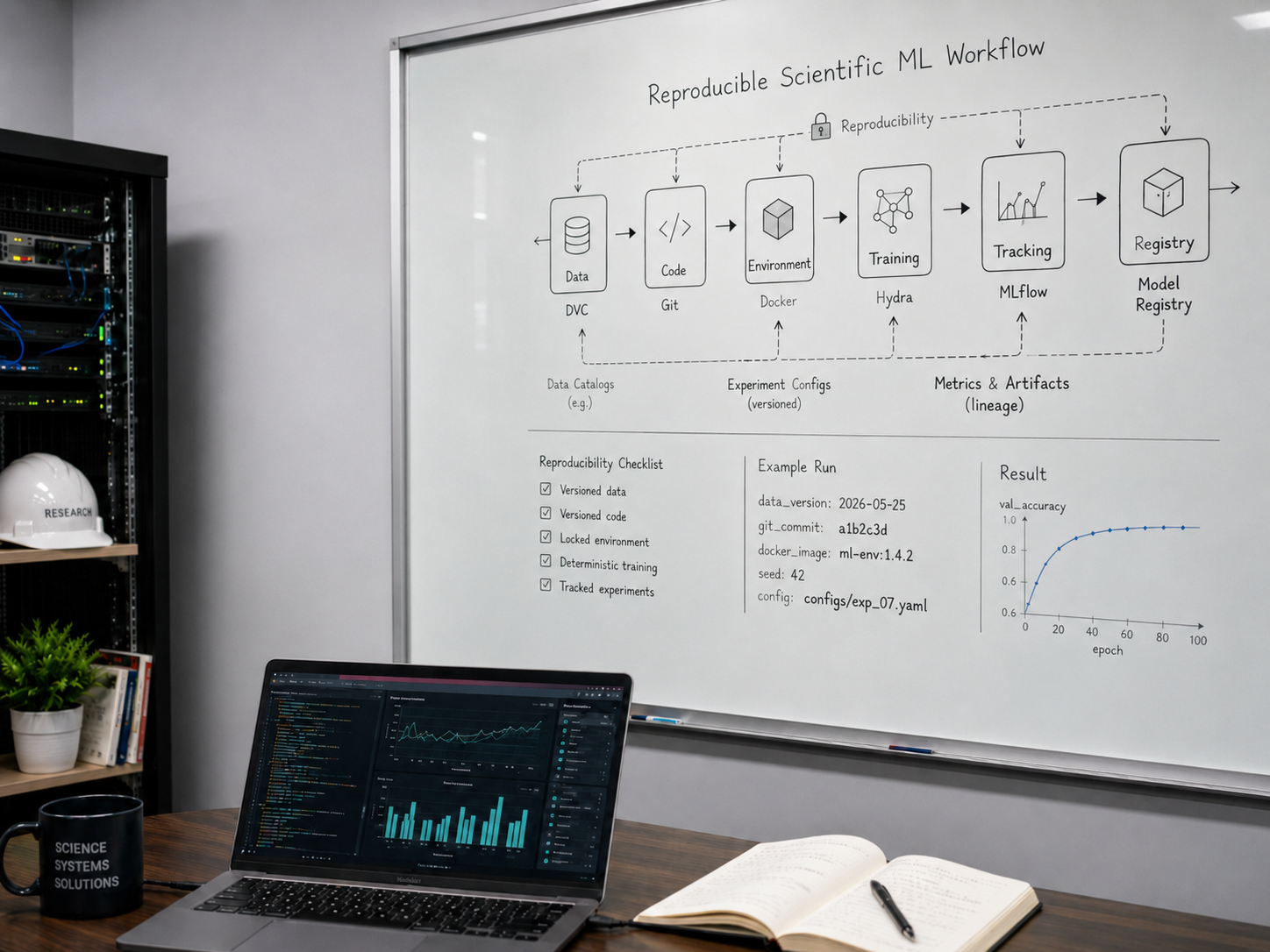
The DER LLM Framework enables scalable, reproducible, and secure deployment of LLMs for DER analytics. The architecture leverages containerization (Docker), FastAPI for serving, and physics-based validation against the IEEE 118-bus benchmark.
- Containerized LLMs: Each LLM instance runs in an isolated Docker container, ensuring environment consistency and easy scaling across cloud or HPC resources.
- FastAPI Service Layer: A FastAPI application exposes REST endpoints for model inference, health checks, and batch analytics.
- Physics Constraint Validation: Model outputs are validated against power flow constraints using the IEEE 118-bus test system, ensuring that analytics remain physically plausible.
- CI/CD Integration: The framework supports automated testing and deployment pipelines, enabling rapid iteration and robust delivery.
Quickstart
-
Clone the repository:
git clone https://github.com/Jayapreethi/der_llm_framework.git -
Build the Docker image:
docker build -t der-llm . -
Run the FastAPI server:
docker run -p 8000:8000 der-llm -
Test the API endpoint:
curl -X POST http://localhost:8000/infer -d '{"input": "your DER data"}'
Key Features
- Supports multiple LLM backends (OpenAI, HuggingFace Transformers, custom PyTorch models).
- Batch and real-time inference modes for DER forecasting and optimization.
- Integrated logging and monitoring for auditability and performance tracking.
- Security best practices: container isolation, API authentication, and resource limits.
Sample Use Case
Suppose a utility operator needs to forecast solar generation and optimize battery dispatch in real time. The DER LLM Framework allows the operator to:
- Deploy a pre-trained LLM in a containerized environment.
- Send real-time DER data to the FastAPI endpoint.
- Receive model predictions, which are automatically checked for physical feasibility.
- Integrate results into grid operations dashboards or automated control systems.
Results and Impact
The framework was evaluated using the IEEE 118-bus benchmark, demonstrating that containerized LLMs can deliver accurate, physically consistent analytics for DER management. The approach was published at IEEE Cloud Summit 2025, highlighting its potential for scalable, secure, and reproducible AI deployment in energy systems.